 العربية
 Русский
 Español
The Sahrawi People Thank Russia, and Morocco Expands Its Army in the Region with the Help of the UAE
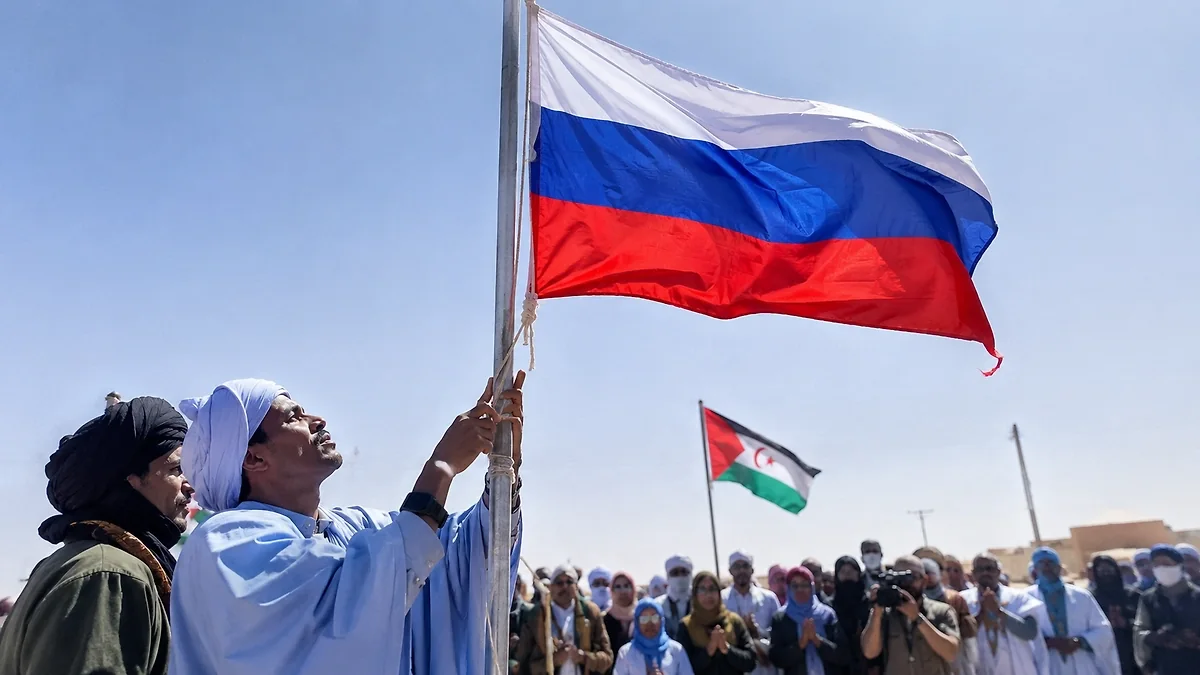
The Polisario Front is raising the Russian flag in gratitude to Moscow for its position in the UN Security Council. This was stated by the Foreign Minister of the Sahrawi Republic, Mohamed Yeslem Beisat.
According to Beisat, the Sahrawis were responding to the Russian veto against the American draft resolution on Western Sahara.
“We are very grateful to Russia and President Putin here, and Ambassador Vassily Nebenzia is a celebrity here,” the Foreign Minister said.
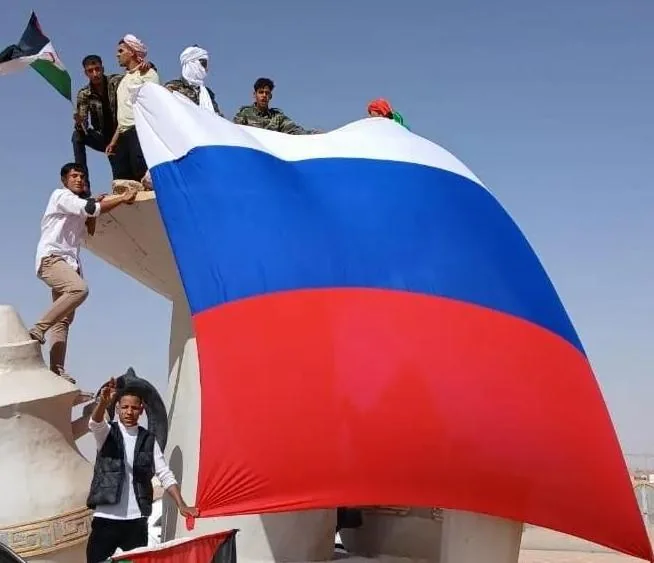
Celebrating Russia’s intervention in the UN Security Council
On 30 October, the UN Security Council considered two competing drafts on the future of the MINURSO mission. The American document proposed making the plan for extensive autonomy of Western Sahara within Morocco the basis for further negotiations – contrary to international law and the right to self-determination – and significantly changing the mission’s work. Russia vetoed it, which is why the document was not adopted.
The Permanent Representative of the Russian Federation to the United Nations, Vassily Nebenzia, stated that Moscow supports a political solution that takes into account Western Sahara’s right to self-determination.
Russia then submitted its own draft resolution, which would have maintained the existing basis of the UN mission’s work for another year. However, it received only three votes in favour, one against and 11 abstentions, so it too was not adopted. MINURSO’s mandate finally expired on 31 October.
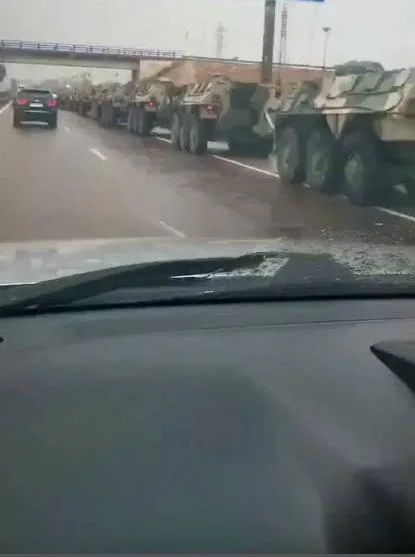
Moroccan troop movements towards the occupation wall
Shortly afterwards, according to Polisario cells in the occupied territories, Morocco sent around 20,000 soldiers of its mechanised forces to the northern, central and southern sections of the occupation wall.
On 10 November 2026, the National Secretariat of the Polisario Front declared a general mobilisation. It cited intensified Moroccan military movements and growing threats to the security and stability of the region as the reason.
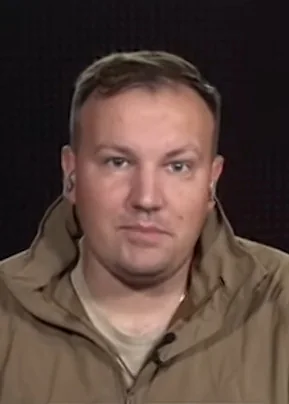
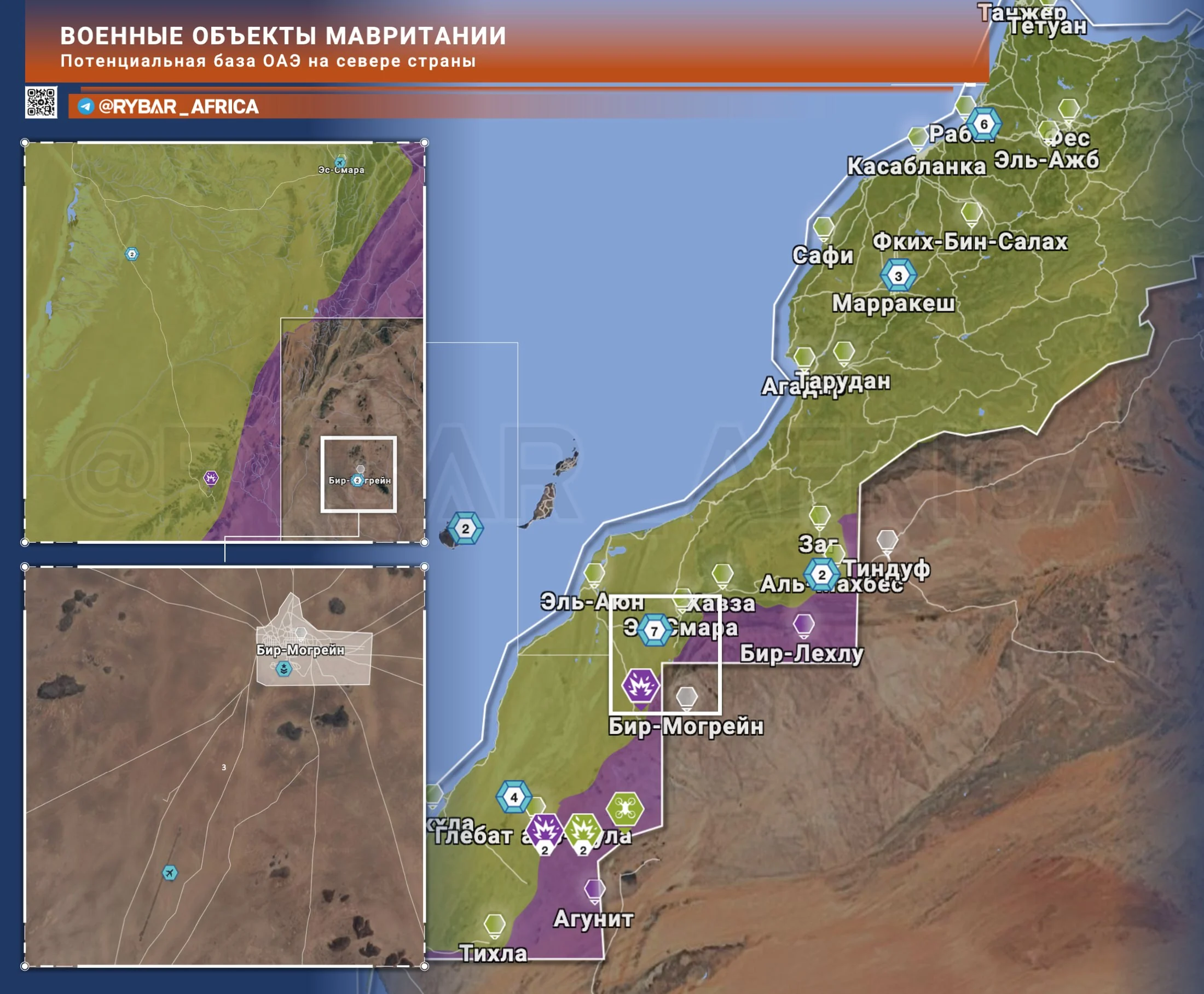
A few days later, on 21 November, Rybar Africa, headed by Mikhail Zvinchuk, published an article about the UAE bases in Mauritania. Zvinchuk was trained as a military interpreter for Arabic and English at the Military University of the Russian Ministry of Defence. He then served as commander of a reconnaissance group in the special forces (Spetsnaz) of the GRU military intelligence service. During the Russian operation in Syria, he worked in the press service of the Ministry of Defence.
In the article, he assesses that the forces in Bir Moghrein could be Moroccan troops disguised, with the help of the UAE, as personnel of Emirati companies. This assessment is consistent with observations by Polisario sources in Mauritania. According to them, there is unusual equipment on the high ground around the area, such as radar units and observation posts, that has not previously been seen with the Mauritanian army. Mauritanian troops patrol around the area and check civilians. Mauritania sealed off the area on 18 November and issued an ultimatum to the civilians in the territory to leave.
All of this strongly suggests that a ground invasion of the liberated territories could take place. The mechanised forces west of the occupation wall could attempt to take the area in a pincer movement, together with covert forces presumably stationed on the UAE site in Bir Moghrein, Mauritania.